Understanding Suffering, Loneliness, and Fear
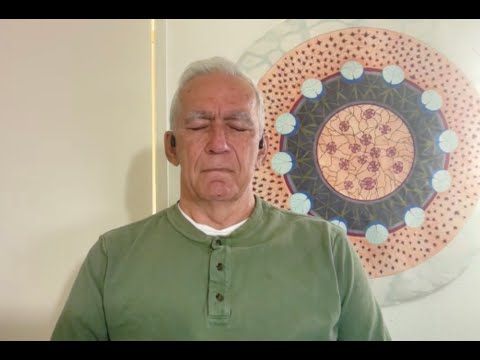
A message channeled during a group session on January 7, 2023, by Rev. Jeff Munnis to help us understand and deal with suffering (our own and the suffering we witness in the world), loneliness, and fear.
Transcript
There are times when you are going to find and feel great suffering in this life, in this world. And though the numbers in history might be a small percent of the total, the total numbers are so much more than at any other time. And all of this suffering is due to the need for change—a change that has to begin on the individual level. It has to begin with the small moments of attention of each person on their individual journey. And together these moments build and grow a groundswell of change. And while there is change, there is much that happens and continues to happen, and those who experience the change often wonder why there is still so much suffering; why it feels like the change for good within each of us individually doesn’t seem to stem the tide of that suffering. There are many reasons for this. One is that most do not understand that the suffering finds its origin in a kind of spiritual suffering, and to have spiritual change, one must overcome many obstacles: the patterns that are existing within us, the patterns of karma, and then there is the stage of our own growth, our own ability to change. And while all these things work together, we sometimes feel as if we are in the dark and cannot see what role we have or what possible step there is for us to make a change.
For those of us here, the change is already beginning. And we may not feel that change right away. It’s important to look inside and see if the change is a karmic change. There is a need for the soul to have knowledge of the karma while still continuing with patterns, old patterns that come in moments of tension or stress or reactivity. It is part of that karmic pattern to witness the pattern in order for there to be change. And so, we find that even when we have knowledge of change, even when we have knowledge of the pattern, we will still have to sit and endure the change through knowing and through witnessing of ourselves. Each of us here has the possibility to witness our own growth. And our maturity comes when we can see that pattern—a pattern that has revealed itself in a dream or a sudden realization during meditation or a sudden jolt of waking to someone else crying out, and us hearing the pain in that voice.
Know that the pain that we recognize in another voice is the same pain in our own voices in deep ways. And it is up to us to go into that depth to seek out the source of that pain, and in so doing, find a way through the pain to change. And all the while when we make this effort, the world around us will not seem to change. And that is part of our work in this world is to know that we must witness the suffering of others while trying to overcome our own suffering. It’s up to us to recognize that the world that we see is incomplete, that there is a part hidden inside of us and a part hidden inside of others that we cannot always see with our physical sight.
But this change occurs with this witnessing of our own process—feeling the pain of our own process, knowing that our ability to gain strength through this process of change is the strength that we feel on the other side of change; that when we feel strength as if it’s been added to us without our effort, we know that we have passed through some of these changes, and that this is a form of grace that will come to us. This grace can come suddenly. It feels sudden. And even though this suddenness lights up with intensity inside of us, know that that is just a tipping point; a point of change, a milestone that occurs that just tells us that we are continuing on our journey, and to know that any suffering that we feel, that we can share, opens a door between us and others in relationship that leads to healing. Know that this takes time and that no matter where we are in our life at this point, just as the prayer spoke, our witnessing becomes the same as Christ, that the days are extended, the hours grow longer, the seconds stretch out before us with this change. It is like an elasticity that exists in the universe. Once we become part of that spiritual net, those threads that hold every part of the universe together, and that when we pull on one of those threads in one part of our life, it initiates change in every part in response. So, though the process is slow to our sense of time, it is rapid in an eternal sense. And our maturity that sits inside of us, the strongest part of our maturity as human beings is when we can rest in that mode of witnessing our own process. We can feel that strength grow in us. It is not the kind of inflation that comes with the ego. It’s not the kind of inflation that comes with the wrong kind of self-assessment, but it sits deeper within us and grounds us, and spreads from there to every other part of our being.
For this group, for the spiritual maturity of this group, this understanding of change, even the suffering and loss that we may see and experience when seen as change, helps us work through those karmic patterns. And even those miracles that we read of with Jesus or with other healers, the changes that they write about, it is as if it is so sudden, yet all the universe works in concert in those moments. Step by step, the process being one of maturing and growth through that maturity.
If you feel alone, if you feel like you’re walking on this journey alone, part of your spiritual discipline or practice is in asking for the presence of another human being that you know shares the spiritual intention of your journey, that shares your desire for union with God, your desire to be present and helpful. The act of asking for that presence and knowing that help comes from that listening and witnessing, that is a practice for those who feel alone. For those of you here who need to hear this in this moment, to know that you are not alone with the presence of God, while it is always true, there is also the presence of God in that other human being that you reach out to to touch in the same way. And in that gathering is a greater strength. In that gathering is a greater form of discernment, of knowing, and the help that comes from knowing together on the journey. And if you’re feeling weak, take the smallest step that is possible, be it physically or spiritually because even in the smallest step, there is an eternity of love supporting that step.
And if there are questions, you can ask or tell Stelli. (00:15:25)
So today we find strength in silence and companionship. (00:17:00)
(D.G.: “What is my physical pain with headaches and back pain, what are those things here to teach me?”)
With every pain, there is a need to find a source, not just the physical symptom, of course, but where is that support, in this case, coming from? Where is the ability to sit or stand in one’s own strength and one’s own power? And when sitting or standing in that same strength or power, being able to vocalize your need, but also to vocalize or to speak your truth in those moments. And the body can let us know if we are not being true to ourselves. But these kinds of things can accumulate over time in the body. So being able to ask for help, but also being able to speak the truth; to not worry about whether you have too much need for someone else to hear or to share with you, but to know that whatever your need is, that it can be shared and asked. You can ask for help. So, in there is a deep need to be able to say that it hurts, a need to be able to say what you need to relieve that pain, a need to be able to say the kind of prayer that says what you would like and why you want to be pain-free, and to see if there is a way that this is connected to a purpose, especially any purpose that you are avoiding or refusing to meet in some way. The same need, perhaps in another person, someone that you share that same pain with, and being able to bring that to the surface, to bring it to prayer will reveal that need for support, and the asking for support. So, this is the deepest, spiritual need that accompanies that pain and is one of the keys to releasing that pain. You need to be comfortable knowing that your needs matter as much as anyone’s needs matter.
(M.M.: “From what you shared, we all suffer in different ways, and through observation and time, I notice that I create my own suffering through fear, fear-based thoughts. I feel disconnected. I want to get closer to my highest self as well as God. What can help me work through that letting go of fear?”)
Yes. Fear. Fear of loss. Fear of pain. Fear, not just of loss and pain, but also life itself; understanding that life carries a risk with it, even to step outside our door. Some of these deeper fears, just the sense of feeling afraid, is the beginning of the decline of an egoic-based understanding of fear. To be able to recognize it and to voice that fear, even the different types of fear that you feel, by naming some of those, in a sense, you will begin to own them. And in owning them or facing them, especially those that are very superficial will dissipate and be released. But also naming those fears, expressing them in prayer, asking for help, saying the things that it does to your body or to your mind, the recurrence of thoughts or the accumulation of thoughts that seem to feed that fear.
It is helpful to redirect our thoughts, not in a sense of denial—we don’t want to deny those thoughts or deny those feelings—but redirecting the energy that we have control over in our bodies and with our thoughts is a beginning step as well. So, by vocalizing them, by praying with them, by redirecting energy toward a constructive activity, and letting them pass. When those thoughts come, they are just like any thought in meditation or prayer, that when we go about our day as the thought comes, it can be released, to let it go. To acknowledge that the thought as a thought form or an energy form can be released, to let it know, to let your body and yourself know that you can release those is important also. And by releasing them, there is the vocalization, but also they can be released through physical activity. They can be released through singing or chanting. Anything that helps redirect the same energy is helpful. But this is not something that we would call behavior modification where we’re replacing one thing with another. It’s not meant to be sort of like a Pavlovian response. This is a much more intentional process that’s being described here where there’s an acknowledgment of the other—meaning the pain or the fear that comes up, pain that might cause fear or a fear that might also cause pain—as those come up, we’re acknowledging them. We are going through them. We’re seeing them as a spiritual expression, not just an emotional expression. But when they are emotional, they are like a wave. They come, and we can help the wave along and let it go and release it as many times as we need to release it, and in that releasing, gradually there will be space between those waves. And when we redirect the energy, the space between those waves of fear, that expands, just like we spoke of earlier where the days become longer, the hours longer, the seconds, a longer expression of, not just witnessing, but also the more blissful moments of our spiritual life that come in, that restore us and give us rest. And, these fears have a physical toll, so there are times when they come when we’re tired, when there is the instigation of being overwhelmed, tired, and the feeling that our defenses are down, these are the times when if we don’t have the strength to redirect, we have the strength to release and to ask for the help as well. This is a continuous process. Even when fear is not so frequent, it’s still helpful to understand the energy of that thought form or that expression within us, and to redirect it toward love or an expression of kindness, again without denial, an acknowledgment, but also a release.
There is a part of this practice that Jesus spoke about when he said my burden is light. And part of what he meant was that the spiritual practice that we have, whether it be meditation or yoga or some type of physical movement, what we’re being asked to do is to be our natural selves—that part of us that’s the most authentic, deepest core of who we are. And in that space, we’re not meant to carry a burden, we’re meant to release the burden. Release the burden from ourselves that we may be feeling, any type of should-do kind of mantra that we have or pattern in our heads can be released, but also to help others release their burden, to just simply put it down. To know that the spiritual practice is not meant to weigh us down. Even our meditation should be light. It should feel spontaneous and curious, and it should have some levity, some joy. And we should feel good, and we should allow ourselves to feel good. Allow ourselves to put aside any kind of burden, even if it’s just for a few moments. To release it begins the practice of freeing ourselves from burdens that we place on ourselves; that these are not burdens placed on us by the universe or by God and understanding that we can give those up and accept ourselves just as we are.