The Destiny of Every Soul
The soul of every human being has a destiny. It’s not a destiny that’s already planned or set in place. And even though we might say that ultimately our destiny is in God, no soul that’s created is created without a purpose. And so, the soul’s destiny is to fulfill that purpose within God. There are very few souls whose purpose is front and center or the focus of their lives from the beginning. Most people travel a path that meanders back and forth, all the while making progress toward their destination. But there are lots of side trips and pauses, lots of hills to climb, and lots of slopes to slide down.
Knowing the vastness of the universe, we are to learn our place in that universe, much like the piece of a mosaic or a piece of a puzzle that fits in place. And to understand this destiny is to also understand that everything that fits together needs every component in order to fit together, so that when any part of that mosaic or that destiny is incomplete, the whole thing remains incomplete. So, we might say that everything is whole within God or God is whole. Our creation out of God’s own being finds its wholeness and matches that wholeness with the wholeness of God so that there is an image—if you want to use the Bible’s term, to be made in the image of God, or a particle that’s a holographic representation of God where every part contains the wholeness. There’s no part that doesn’t contain some part of the whole and can find that wholeness within.
The journey or the voyage that we’re on finds the boundaries of our purpose—not our existence, but our purpose. So that we have ultimately freedom, but our purpose, as it is fulfilled, finds our place, finds our companions, finds those that we connect to, to form the fabric of all being, not just our own being, but of all being. Humans beings intuitively know this, and they speak of it in ways that express this, but the human mind being very rational always has some exception or some limitation to seeing that wholeness and that connection. That’s why the mind and the intellect are not the fullest expression of the human soul. There is a greater part of our consciousness that helps us find the wisdom to use the knowledge we have in ways that are expansive, that are unfolding, that in a sense are multiplying, rather than static or the same. So, the boundaries in the spiritual sense, are unlimited. In a purpose sense, sometimes quite defined. We set these boundaries, in some ways, by that which we love. So, you might say that ultimately our destiny is determined by our love. And this is true in a general sense, but our gifts and our talents use that love that is given to us by God in ways that are unique to every individual. And so, in that diversity, we find the perfection of God, the perfection of creation.
We have so much capacity. Our soul has such a great capacity, that it’s easy to fool ourselves into thinking that we can’t be harmed or we’re invincible or we can be God-like, and though we have these qualities and characteristics, those qualities and characteristics cannot become whole, as in God, by themselves. They depend on relationship, which is why we learn so much about relationship in this material realm. That the relationships we have reflect our relationship to God, our ways of cooperating, facilitating, working side-by-side or caring or witnessing another human being, all form the bonds of a connection to our place within God. So, it’s natural that if we love music or if we love art or if we love building things, we’re likely to find around us, people, other souls that have the same interests. And it is primarily among those that have the same interest and the same loves that there tends to be the most conflict. There tends to be a desire for dominance or prominence, when what is always required or asked for in a spiritual sense is cooperation and sharing.
There are so many aspects of human existence that mirror some of these capacities in the universe. The idea that there can be unlimited growth in the material plane—this is a small reflection of the growth that is available to us spiritually, but in the material plane, there are limits to growth. There are limits to our capacity. And without experiencing those limitations or those capacities, it’s difficult for us to understand the impact of our energy and our being, our desire, and our direction. So, we live in a world with these boundaries that push back against us in order to learn how our freedom is integrated in the whole. That there is a capacity for freedom even within the limitations of obedience or very tight boundaries. So, we learn our freedom by pushing against those boundaries, by exceeding them through transgressions, through errors, through mistakes, and each time we step forward, those very things become the information and the knowledge that we then wisely use to, in effect, create our soul. And when we say create, it's not that there’s anything added to us, it is a more a matter of how our soul unfolds; how it becomes accepting and expressive of those inner layers that continuously unfold, bringing us new experiences to build on the previous experiences—the things we learn to let go, the things we learn to keep. But within this system, the keeping and the using are determined by its spiritual use—its spiritual usefulness. There’s no ownership. There’s no taking possession. And that is also a lesson that we learn in this material plane. That no matter what our possession might be, in a material sense, it will never feel like enough. Never enough security. Never enough money to find security. Never enough food to satisfy certain appetites or desires. We either experience a lack as a way of establishing a boundary in freedom or we experience an excess as a way of learning to establishing a boundary and our freedom. Our human language is sometimes difficult to use when describing these processes that are both/and processes, not either/or processes. So, what can sometimes feel like a contradiction or a limitation can actually be in harmony or without limitation. Learning that, accepting that, is part of the journey or the voyage that we’re on.
In this ultimate destiny, where our purpose is fulfilled, there is not a resolution that comes that says it’s finished. And that is because all of creation is a very dynamic process. The temporary characteristic of things in the material world corresponds to the change and opportunity, the potential that exists in a spiritual sense. So that that change and that transformation, that being made new, is a continuous process and a re-experiencing of one’s purpose. And because the purpose has boundaries that are established by love, the boundaries are not a spiritual limitation. So, the renewal isn’t just within some small cocoon that’s tucked away in a corner of God’s being, but that the flow of energy that is within God continuously renews every component of God’s own being, every process of God’s own being, every potential that is God’s own being.
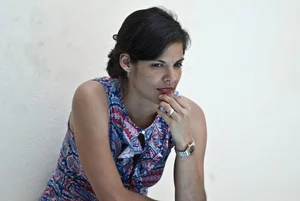
We as human beings don’t find the peace of this place within ourselves easily. The peace that is the place of finding this purpose is at the intersection of where our purpose and our love are most challenged. And that intersection can sometimes feel like an abyss, where everything falls away and seems unattainable. There are glimpses of this abyss that we see from time to time in our lives. We can see a portion of this when we lose a loved one whether by relationship or by death. We see a portion of this when we suffer a traumatic injury or abuse. We see it when the things that we love the most are taken away. We see it when we’ve been gone from ourselves, disconnected, and then find ourselves, and realize any opportunities that have been lost. So, this feeling is not unfamiliar to us. It can be overwhelming, but it is precisely in this intersection of our desire, our love, and our purpose that we find that transformation and change. And that is why our transformation and change appears to us or feels to us as if we are doing nothing, as if we are just sitting in the midst of our experience unable to control our emotions, to control our feelings, where we don’t feel like we have any agency. And in those moments, if we can find acceptance of where we sit or where we are in that moment, if we can find grace in that moment when we’re staring into what feels like a vacuum or emptiness, those are moments that are filled with grace and compassion. And through that grace and compassion we’re able to see the truth of who we are. We’re able to see the truth of our capacity, and even though we can still live the rest of this life knowing that we fall far short of our capacity, even that part of our experience is meant to bring us more fully into our purpose, into our love, and into that most intimate connection with ourselves with that most intimate connection to God.
If we want to accelerate our ability to grow, to find this place within ourselves, to be able to master that aspect of our experience, it’s in a kind of patience that allows us to seek awareness in every moment, where things slow down, where we become an observer or a witness to ourselves and to creation. We have that capacity. It’s a capacity that comes from an awareness that has not just patience, but also a certain amount of restraint that interrupts our reactive response, that allows us to gather our strength in a different way, that helps us pull our strength and our love together. If in that moment, we only bring our strength; if in that moment, we only bring our focus or our will; if we only pull those kinds of qualities we have as human beings into the moment, we’re not coming with awareness. We also have to bring our love into that moment. And it is the combination of the love with those other aspects or qualities we have as human beings that actually gives us greater strength, a stronger will, a better ability to bring ourselves to a place of acceptance and release, to a place where we are without fear and anxiety. The place where we give up things—even those things about ourselves that we believe we own as a human being, whatever that trait or quality or characteristic is that we believe about ourselves to be true. It can be let go and released.